Specialized Handling for Sensitive and Regulated Cargo
Comprehensive logistics coordination for Classes 1 through 9 hazardous commodities. Rigorous adherence to IATA DGR, IMDG Code, and ADR regulations across international and domestic trade lanes.
Why Precision in Classification Dictates Safe Transit
Dangerous goods (hazardous materials) represent substances or articles capable of posing a risk to health, safety, property, or the environment when transported. Transporting these commodities is strictly governed by modal authorities:
- Air Freight: IATA Dangerous Goods Regulations (DGR) and ICAO Technical Instructions.
- Ocean Freight: International Maritime Dangerous Goods (IMDG) Code.
- Inland Road: ADR (Agreement concerning the International Carriage of Dangerous Goods by Road) and domestic transit mandates.
Requirements depend directly on cargo classification, transport mode, intended route, and carrier acceptance policies. Arham Logistics works with shippers to identify applicable Packing Groups (PG I, II, or III), verify Safety Data Sheets (SDS), determine acceptable quantity limitations, and coordinate carrier pre-approvals prior to vehicle loading.

Every UN classification and label verified against active carrier acceptance tables.
Dangerous Goods Classes (1 to 9)
Our team coordinates transport planning across the full spectrum of regulated classes subject to mode and carrier authorizations.
Class 1: Explosives
Subject to stringent operational authorization, security escort coordination, and dedicated military or commercial carrier approvals.
Class 2: Gases
Flammable gases (2.1), non-flammable non-toxic gases (2.2), and toxic gases (2.3), including compressed cylinders, aerosols, and refrigerants.
Class 3: Flammable Liquids
Paints, solvents, resins, adhesives, fuel products, and specialty liquid chemicals categorized by flash point and boiling range.
Class 4: Flammable Solids
Flammable solids (4.1), spontaneously combustible substances (4.2), and substances which on contact with water emit flammable gases (4.3).
Class 5: Oxidizers & Organic Peroxides
Oxidizing substances (5.1) and thermally sensitive organic peroxides (5.2) requiring controlled ambient temperatures and segregation.
Class 6: Toxic & Infectious Substances
Toxic chemicals (6.1) capable of causing serious injury and biological diagnostic substances (6.2) requiring certified triple-packaging.
Class 7: Radioactive Material
Industrial isotopes and non-destructive testing equipment moved under specialized transport index (TI) calculations and carrier clearance.
Class 8: Corrosives
Acids, battery fluid, caustic soda, and industrial alkaline solutions that require certified drums, intermediate bulk containers (IBCs), or containment boxes.
Class 9: Miscellaneous Regulated
Lithium-ion batteries (UN 3480 / UN 3481), lithium metal batteries, dry ice (UN 1845), genetically modified organisms, and environmentally hazardous substances.
The Dangerous Goods Shipment Journey
How we coordinate hazardous shipments to ensure zero compliance gaps at port and carrier inspection checkpoints.
SDS Audit
Verification of Section 14 transport information, UN Number, Packing Group, and flashpoint specifications.
Packaging Selection
Verification of UN certified containers (4G fiberboard, 1A2 steel drums, 31HA1 IBCs) rated for gross mass.
Marking & Labeling
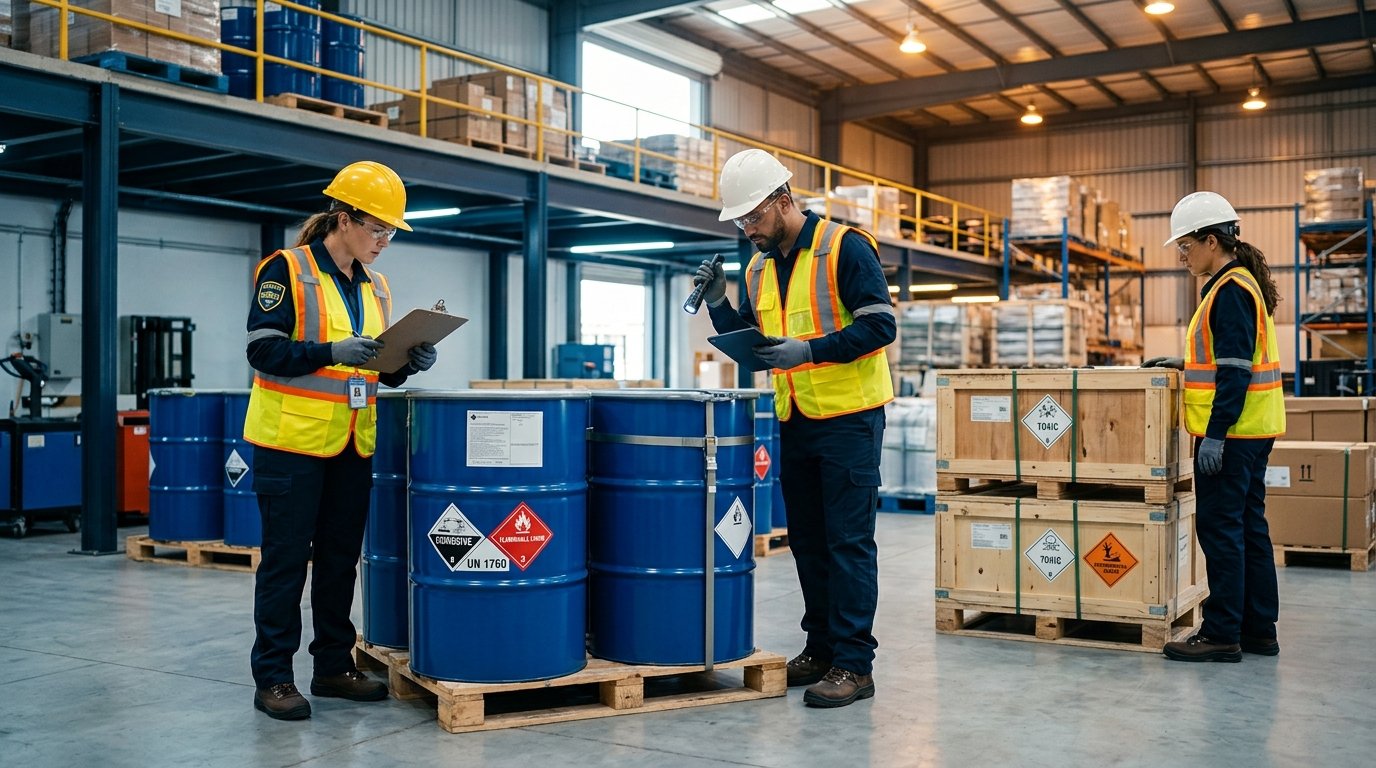
Placement of hazard diamond placards, proper shipping names, UN markings, and emergency contact identifiers.
Declaration Review
Drafting review for Shipper's Declaration for Dangerous Goods (DGD) or IMO Multimodal form before signing.
Carrier Tender
Secured handover to airline DG acceptance desk or shipping line hazardous cargo coordinator at terminal.
Have a Regulated Commodity to Ship?
Send us your product's Safety Data Sheet (SDS) and destination port. Our dangerous goods desk will review carrier route restrictions, packaging requirements, and provide a comprehensive quotation.